

MY Evolution recently contributed to the Malaysian Technical Standards Forum Bhd (MTSFB) working group developing Malaysia’s Technical Code on IoT syntactic data interoperability.
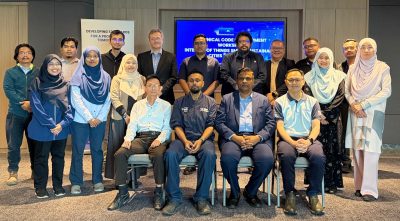
The workshop brought together representatives from industry, academia and technology providers to discuss how Internet of Things systems from different vendors can exchange data more consistently while avoiding unnecessary vendor lock-in.
Bringing an operational perspective to interoperability
MY Evolution’s contribution focused on practical interoperability from an operator and integration perspective. We highlighted the importance of ensuring that standards remain open, technology-neutral and realistic for large-scale IoT deployments, including those involving constrained devices and multi-network environments.
Effective interoperability is not only a technical objective. It gives organisations greater flexibility when selecting devices, connectivity and platforms, while supporting IoT solutions that can evolve as operational requirements change.
Clarifying connectivity’s role in the IoT architecture
We also contributed to discussions about the role of connectivity providers within the broader IoT architecture. This included helping distinguish network connectivity and device management responsibilities from application-level data processing.
Clear architectural roles can make implementations easier to understand, integrate and operate. They can also help stakeholders identify where data transformation, device control, security and service management should take place across an end-to-end deployment.
Supporting Malaysia’s expanding IoT ecosystem
Data interoperability is becoming increasingly important as IoT deployments expand across Malaysia’s smart cities, utilities, industrial systems and critical infrastructure. Common, practical approaches to data exchange can help different systems work together more effectively and support long-term scalability.
MY Evolution will continue contributing operational experience from real-world deployments to help ensure future standards remain practical, interoperable and implementation-friendly.